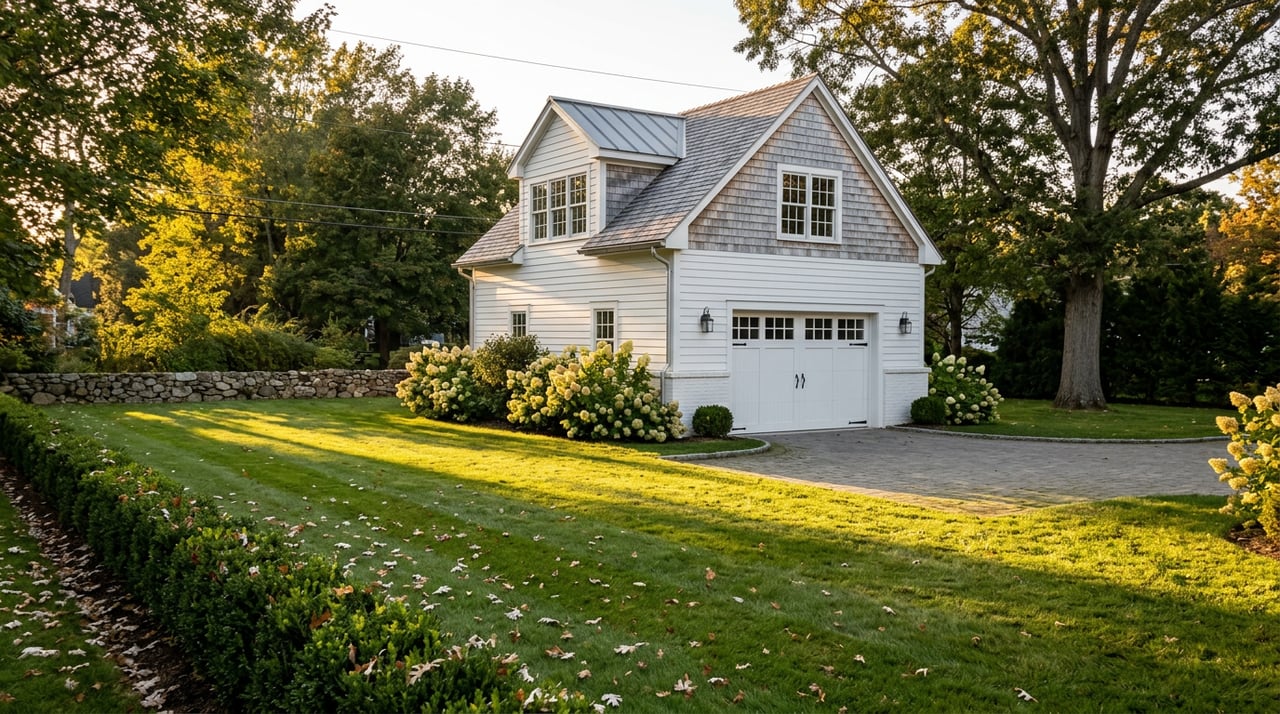
Say you're looking at a three-bedroom rancher on a half-acre lot just outside downtown Walkersville. The garage is oversized, there's a detached shop out back, and you're thinking about converting one of those structures into a rental unit or a space for an aging parent. You've read that Maryland passed a law making accessory dwelling units easier statewide, and you've heard Frederick County already allows them in most residential zones. So you assume the path is clear.
It isn't, at least not yet, and not in Walkersville specifically.
The county says yes. The town hasn't caught up.
Frederick County's own zoning ordinance already permits accessory dwelling units by right across a wide swath of the county, including the RC, A, R1, R3, R5, R8, R12, R16, VC, MXD, PUD, and MX districts. That covers most of the unincorporated land around communities like Ijamsville, New Market, and Monrovia. The county even built in a break for smaller units: an ADU under 800 square feet is exempt from the public school development impact fee that applies to larger accessory units.
That's the county rule. It stops at the town line.
Walkersville is an incorporated municipality with its own zoning authority, separate from the county's. Frederick County still issues the building permit on the town's behalf, but before that happens you need a Town of Walkersville zoning certificate confirming the project matches Walkersville's own code, not the county's. And right now, Walkersville's zoning code for its R-1 and R-2 residential districts, which cover most single-family lots in town, states plainly that no residential uses are permitted within accessory structures.
Read that again if you're picturing a garage apartment or a converted shed as a rental. Under the code as written today, that's not a legal use inside Walkersville town limits, even though the same conversion might be fine on a similarly sized lot in unincorporated Frederick County ten minutes away.
The deadline that changes this is three weeks out
Here's why this is worth writing about right now instead of six months ago or six months from now. Maryland passed House Bill 1466 in 2025, and it took effect October 1 of that year. The law requires every county and municipality with planning and zoning authority in the state, Walkersville included, to adopt a local ordinance authorizing ADUs on lots with a single-family detached home. The deadline for that is October 1, 2026.
As of today, that's three weeks away.
So Walkersville's current code, the one that bans residential use of accessory structures, is on borrowed time. The town has to pass something new before that date. What it will look like is still an open question, because the state law sets a floor, not a template. Local jurisdictions retain real discretion over the details: setbacks, size caps, owner-occupancy requirements, and parking. The law does limit how far towns can go in restricting things. A jurisdiction can't tack on extra parking requirements for an ADU without first completing a parking study, and if it does require added parking, it has to build in a waiver process. Private restrictions get reined in too. Deeds, HOA bylaws, and similar covenants can't impose limits so severe they effectively block a qualifying homeowner from building or renting an ADU.
None of that guarantees a specific project pencils out. Septic capacity, lot configuration, existing structures, and standard building code still apply on top of whatever zoning allows. A four-bedroom home on a septic system built for four bedrooms doesn't suddenly gain the capacity for a fifth living space because the zoning code changed.
Three jurisdictions, three different answers, all inside the same market
What makes this genuinely confusing for buyers is that "Frederick County" isn't one rulebook. It's a patchwork, and Walkersville is just one piece of it.
| Jurisdiction | ADU status as of September 2026 | Key condition |
|---|---|---|
| Frederick County (unincorporated areas like Ijamsville, New Market, Monrovia) | Allowed by right in most residential and agricultural districts | One ADU per lot; units over 800 sq ft owe a school impact fee |
| City of Frederick | Allowed, with conditions | Owner must occupy either the primary home or the ADU; the non-owner-occupied unit can't be rented for less than 90 days |
| Town of Walkersville | Not currently allowed in R-1/R-2 districts | Code bans residential use in accessory structures; new ordinance required by October 1, 2026 |
A buyer comparing a lot in Walkersville to one a few miles away in New Market isn't just comparing lot size and school boundaries. They're comparing two entirely different zoning authorities with two different answers to the exact same question about whether a detached structure can hold a tenant.
What this means if you're shopping with an ADU in mind
If you're an investor eyeing a rental unit, or a buyer thinking about a multigenerational setup with a parent or adult child, the practical move right now is to stop treating "Frederick County allows it" as the final word and start asking two narrower questions.
First, has the Town of Walkersville adopted its updated ordinance yet, and if so, what does it actually permit? The Town's Planning Commission handles zoning certificates locally, so that's the office to check before you assume anything about a specific property. Second, even once the ordinance exists, does the lot you're looking at have the septic capacity, setbacks, and structure condition to make an ADU feasible in practice, separate from what's legally allowed on paper?
This matters most for anyone under time pressure. If you're writing an offer with an ADU as part of your plan, don't let a pending state deadline stand in for a confirmed local answer. The gap between "the law requires this by October 1" and "the town has actually passed it and here's what it says" is exactly where plans stall.
A few questions worth asking before you write an offer
Does the state law mean Walkersville has to allow ADUs starting October 1, 2026? The law requires the town to have a local ordinance in place authorizing ADUs by that date. It doesn't automatically legalize any specific conversion the day the calendar flips. What the town's ordinance actually permits, in terms of size, occupancy, and structure type, still needs to be confirmed once it's adopted.
If I buy in Walkersville now, can I still plan around an ADU? You can plan, but treat it as a future-phase project rather than something to close on this month. Confirm the property's zoning district, check in with the Town Planning Commission on where the new ordinance stands, and have a septic or utility capacity conversation before you count on the income or the extra living space in your numbers.
Does any of this affect financing, including VA loans, on a property with a planned ADU? Lenders evaluate the property as it exists at the time of appraisal, not based on a future zoning change. If an ADU isn't legally in place yet, most loan programs, VA included, will underwrite the home as the single-family property it currently is. Any ADU income or added value typically only factors in once the unit is built and legally recognized.
Zoning quirks like this one are exactly the kind of detail that separates a smooth closing from a surprised buyer three weeks after signing. If you're weighing a Walkersville property with a rental unit or an in-law suite in mind, or you just want a straight answer on what a specific lot allows before you write an offer, Adam Murphy can help you sort out what's confirmed, what's still pending, and what actually makes sense for your plans. Let's Connect.